25 Day 200-hour Yoga Teacher Training in Rishikesh, India: A Holistic, Transformational Experience
Yoga Teacher Training India
Are you looking for the best yoga teacher training course (YTTC) in Rishikesh, India? Om Shanti Om Yoga Ashram is one of the best yoga schools in Rishikesh, offering Yoga Alliance-registered traditional Hatha yoga and Ashtanga Vinyasa flow YTTCs for beginners, intermediate, and advanced level programs in Rishikesh. Be a certified yoga teacher by enrolling in their upcoming authentic and affordable YTTC.
Meet the instructors
Read more
Highlights
- Eligible to register with Yoga Alliance upon completion
- Yoga philosophy and teaching methodology classes
- Anatomy and physiology lessons
- Ayurveda class
- Satsang (spiritual talk)
- Traditional Indian classical music concert
- 24 nights accommodation, plus one complementary night
- Indian vegetarian meals during the course
Skill level
- Beginner
- Intermediate
- Advanced
Yoga styles
24 days with instruction in English
 Average daily hours of activity: 9.5
Accommodation
Facilities
- Air-conditioned rooms
- Café
- Dining area
- Lobby
- Restaurant
- Yoga shala
- Free Wi-Fi
- Wireless internet
Experience the true yogic lifestyle at the divine location of Om Shanti Om Yoga Ashram's yoga school in Rishikesh. To be a good yogi, it is necessary to keep the mind healthy and clean; for this, the yoga school's accommodation plays a crucial role. Rishikesh is regarded as a spiritual location, with a tranquil atmosphere and beautiful sights far from the chaos of fast life.
This region is known as the hub of yoga, and in this beautiful location, Om Shanti Om Yoga Ashram's yoga school provides gorgeous, selected accommodation. They provide spacious accommodations with stunning mountain and river views and are furnished with comfortable beds, cupboards, hot water baths, and Wi-Fi. They are also near shopping outlets for your personal needs, as well as shopping centers, grocery stores, and restaurants.
The ashram is located in a peaceful place close to nature at the foot of the surrounding hills. All accommodations are fully ventilated to the open air and atmosphere. During winter, from November to February, comfortable winter blankets are provided.
Explore tranquil living at Om Shanti Om
Om Shanti Om Yoga will certainly make you feel that you are at home. They know the role of a good environment in your training, and thus, they do not leave any stone unturned as far as accommodation is concerned. Their rooms are the most comfortable; therefore, you will have time to enjoy all the moments during your trip. The ashram also ensures that the facilities support the learning process by ensuring that the stay is peaceful and relaxing.
Comfort and convenience
Om Shanti Om Yoga Ashram will provide comfort and coziness in a room that is well-designed. In either a twin-shared room or a personal room, you will be at home with modernities and a relaxed ambiance.
2 buildings
There are two buildings that are committed to Om Shanti Om Yoga Ashram's campus in order to accommodate various courses. The former is the 200-hour teacher training building, and the latter is the 300-hour teacher training building. They are both fitted well and equipped with state-of-the-art facilities to assist in your training requirements.
Home-like ambiance
The accommodation will have a homely feel, i.e., you can have less worries and concentrate on your studies with 100 percent attention. The relaxed atmosphere and relaxing environments will enhance the effectiveness and fun of the training process.
Modern facilities
All buildings are modern to ensure that you will enjoy your stay. Om Shanti Om Yoga Ashram offers comfortable beds and clean bathrooms, and everything will be taken care of, thus leaving you with a home away from home.
Air conditioning available
Air conditioning (AC) can be purchased at an extra fee. Rooms with AC are few / low, and therefore, you should inquire about this before you book in order to have the room of your choice.
Program
Certification
Students who complete their subsequent training are eligible to register with Yoga Alliance as Registered Yoga Teachers (RYT®).
Om Shanti Om Yoga Ashram's 200-hour yoga teacher training course (YTTC) is accredited by Yoga Alliance, making you eligible to register as an RYT 200 upon successful completion. This certification will allow you to teach beginner and intermediate-level yoga classes worldwide.
The certification is globally accepted by Yoga Alliance. It's widely accepted by most countries, so you can practice in yoga studios, fitness studios, wellness resorts, or even online teaching. Some areas have other teaching qualifications, so do your best to check the regulations of the place you'll be heading to.
This teacher training is a program for beginners with basic knowledge of yoga. It will be held by experienced, reputable meditation guides and a team of accomplished yoga teachers. The teachers and guides include an Ayurvedic doctor who feels privileged to share his / her knowledge and practice of ancient traditions with modern elements of medical sciences (yoga, anatomy, and physiology).
This training program aims to provide a solid foundation in different aspects of yogic disciplines that will prepare you to apply for the 300-hour yoga teacher training program.
In addition, this 200-hour yoga training program includes mantra recitation (mantra - Japa), daily joints and glands practices (granthi - vimochana - kriya), yoga postures (yoga asanas), meditative steps of doing asanas, six cleansing exercises (shatkarma), science of breath (pranayama), and yoga energy locks (bandha).
It also includes yoga gestures (mudra), meditation (dhyana), yogic sleep (yoga Nidra), history and philosophy of yoga (yoga darshana), yogic anatomy and physiology of the human body, basic principles of Ayurveda, asana alignment practicum classes, yoga teaching practice, and teaching methodology.
The 200-hour YTTC focuses on Hatha, Ashtanga, and Vinyasa flow yoga, pranayama (breath practices), meditation, alignment, and yoga philosophy. This broad approach will enable you to develop a solid foundation for personal practice and teaching.
Yoga is not exclusive. There will be no age restriction or any kind of body type. But, all attendees should be in good health and physically fit to take morning yoga classes on a daily basis. In case you have any illness, Om Shanti Om Yoga Ashram suggests that you consult your physician before enrolling.
The curriculum includes comprehensive anatomy lessons, as well as hands-on training in alignment, adjustments, and modifications. You will also learn how to practice safely and how to teach effectively.
A 200-hour YTTC is an introductory course that will get you ready to begin teaching yoga. A 300-hour YTTC is an advanced course that expands on the 200-hour training with increased insight into yoga philosophy, anatomy, sequencing, and specialized practices. Both will qualify you to become an RYT-500.
Along with physical positions (asanas), the program also involves meditation, chanting of mantras, pranayama, and yogic philosophy to give a complete yoga experience. These will provide a deeper awareness and connection spiritually to yoga as well as to the physical practice.
After the completion of the course, students will be given a certification of completion of the 200-hour YTTC program from Om Shanti Om Yoga Ashram.
Completing a 200-hour YTTC opens many career opportunities in the wellness industry. After graduation, students can register with Yoga Alliance as an RYT-200 and begin teaching yoga professionally.
Possible career paths include:
- Teaching yoga at studios or wellness centers
- Leading yoga retreats and workshops
- Offering private yoga classes
- Teaching yoga online
- Corporate yoga programs
- Continuing advanced yoga studies (300-hour or 500-hour YTTC)
Many graduates also use the training to deepen their personal practice rather than pursuing teaching full-time.
Curriculum
- 60 hours of yoga technique
- 25 hours of teaching methodology
- 9 hours of mudra, bandha technique
- 10 hours of Ayurveda and yogi's lifestyle
- 15 hours of anatomy and physiology
- 25 hours of yoga philosophy and psychology
- 12 hours of meditation and yoga Nidra
- 19 hours of pranayama and shatkarma
- 10 hours of recitation of the mantras
- 15 hours of practice teaching guidance
Course summary
Most of the time spent on this course will cover these core areas:
Yoga philosophy (darshana)
Delve into the essential ancient wisdom, including the history and ethics of yoga, Indian culture, and Kundalini. This essential ancient information will be the key for you to earn yogic strength. You will be taught about the history and ethics of yoga, Indian culture, Kundalini, and much more.
Dhyana (meditation)
Explore the practice of meditation to attain a state of self-realization (samadhi) and achieve tranquility of emotions and mental well-being. By practicing meditation, you will be attempting to reach a state of self-realization. This will aid in gaining tranquility of emotional, physical, and mental well-being.
Pranayama
Master ancient breathing techniques vital for meditation preparation, enhancing the respiratory system, and purifying body and mind. Ancient breathing techniques are used in preparation for meditation. This is a vital aspect of yoga practice. It will improve the respiratory system and purify the body and mind.
There will be an introduction to the topic, followed by sitting postures, mudras (yoga gestures that affect energy flow), and yoga bandhas, which are a way of improving lung capacity.
Mantra chanting
Experience the spiritual use of sacred sound vibrations through meaningful chants for a clear and focused mind. Each of the chants has a unique meaning and use the sacred sound vibrations in a spiritual way, creating a clear and focused mind.
Hatha, Vinyasa, Ashtanga yoga
Undertake an in-depth study of these yoga styles, learning correct practices and postures. There will be an in-depth study of all of the asanas / poses within these styles, and you will be taught how to practice them in the correct ways.
This Ashtanga Vinyasa primary series literally means yoga therapy. This, when practiced regularly, heals all sickness and purifies your body in preparation for deeper, advanced yogic practice.
Ashtanga means eight limbs of the body, and Vinyasa means breathing and movement system. For each movement, there is one breath. The purpose of Vinyasa is for internal cleansing. Breathing and moving together while performing asanas makes the blood hot, thus improving circulation.
Yin yoga
Engage in a slow-paced style, focusing on longer-held postures, stimulating subtle body channels, increasing joint circulation, and improving flexibility. Yin yoga is a slow-paced style of yoga as exercise, incorporating principles of Traditional Chinese Medicine (TCM) with asanas (postures) that are held for longer periods of time.
The sequences of postures are meant to stimulate the channels of the subtle body, increasing circulation in the joints and improving flexibility. A more meditative approach to yoga, its goals are awareness of the inner self.
Restorative yoga
Practice specific asanas held for extended periods with prop support, promoting relaxation and stress reduction. Restorative yoga is the practice of particular asanas, in which each asana is held for longer than in conventional classes, often with the support of props such as folded blankets, bolsters, cushions, and walls in order to relax the body and remove stress.
Sukshma vyayama
Explore subtle exercises promoting activation of the pranic body for effective relaxation. Sukshma is a Sanskrit word meaning "subtle." The presence of sukshma is felt, but not seen. Sukshma yoga is an excellent relaxation technique that promotes and activates the pranic body. It is a form of yoga comprising subtle exercises that are simple to practice yet highly effective.
Laughter yoga
Participate in prolonged voluntary laughter exercises for physiological and psychological benefits. Laughter yoga is a modern exercise involving prolonged voluntary laughter. This type of yoga is based on the belief that voluntary laughter provides similar physiological and psychological benefits as spontaneous laughter.
It is usually done in groups, with eye contact and lots of playfulness between participants. Intentional laughter often turns into real and contagious laughter.
Physiology and anatomy (sarir vijnan)
Understand the physical bodily functions, including skeletal, muscular, and joint movements, as well as the study of organs and chakras. Learning and understanding the physical bodily functions will help prevent injury before, during, and after practice.
The types of yoga anatomy are both physical and spiritual. This will include the study of digestive, respiratory, circulatory, nervous, and endocrine systems, as well as organs and chakras. The anatomy studies will teach how the body is affected by asanas - skeletal, muscular, and joint movements.
Teaching practice and methodology
Learn to demonstrate, correct alignment, and instruct fellow students, fostering a transformative and enjoyable experience. You will learn how to be able to carry out demonstrations, correct alignment, and instruct other students by performing in front of your peers and yoga teachers on the course. Being able to create peace and positivity will be key to ensuring that your students have a transformative and enjoyable experience with you.
Start your path to becoming a certified yoga instructor today! Join Om Shanti Om Yoga Ashram's 200-hour YTTC, gain expert guidance, transformative insights, and international certification.
- Expertly crafted curriculum by yoga masters to support those with no prior qualifications
- Accredited by Yoga Alliance USA, ensuring high standards
- Chance to become eligible to set up your own yoga studio or become an online trainer
Course overview
A 200-hour YTTC in Rishikesh, India, is very popular among students who choose to be a yoga teacher or for personal life transformation. At Om Shanti Om Yoga Ashram, they offer a 200-hour training course, consisting of four weeks, at their homely school.
This 200-hour course will cover an extensive amount of learning across the whole spectrum of the yogic way of life. It will teach you the root principles of ancient yoga traditions. 200 hours of academic teaching and physical practice is an essential, approved certification by the Yoga Alliance, enabling you to confidently and correctly teach yoga practice wherever you may be in the world.
Aside from being the perfect fit for someone wanting to be a yoga teacher, this course is also suited for any individual with a serious interest and desire to understand the diverse layers of yoga for personal reasons.
You will be given group or individual attention during classes, with your teachers being available after teaching for any questions that might have to do with your yoga teacher training journey.
This 200-hour course will give you a holistic style of exercise, different from that of a conventional approach, creating awareness, concentration, relaxation, and peace within. It will integrate the physical, mental, and spiritual elements of yoga, which have been proven to enhance both a content state of mind and a healthy, fully functional body. Go and join for a truly life-changing yoga experience.
Why is Om Shanti Om Yoga's 200-hour YTTC in Rishikesh the best?
Om Shanti Om Yoga is a popular school of yoga in Rishikesh that is dedicated to imparting authentic yogic knowledge. The school has very experienced and certified instructors, blending traditional philosophy and modern practices perfectly so that every student comprehends yoga from deep within.
Om Shanti Om Yoga Ashram focuses on the growth of each individual, with proper class sizes for one-on-one attention. The school aims at establishing a deeper connection between body, mind, and soul so that students can actually experience yogic transformation.
Apart from the training, Om Shanti Om Yoga Ashram gives students an experiential spiritual journey, wherein they can sense the divine energy of Rishikesh. The peaceful surroundings, along with the warm community of like-minded people, create a rich and fulfilling experience.
The Yoga Alliance USA certification is accepted worldwide, enabling students to practice yoga anywhere in the globe after attaining the program. Join the 200-hour YTTC in Rishikesh to begin your journey of self-awareness, integrated development, and spiritual growth.
Whether you want to become a professional yoga teacher or advance your practice, this training will provide you with the tools to live and teach the yogic lifestyle. Take the first step towards a rewarding career in yoga and register today!
What does this 200-hour YTTC provide?
Become a certified yoga teacher and elevate your practice to new levels with this 200-hour YTTC in Rishikesh. Created for beginners as well as seasoned practitioners, this life-changing course offers profound insights into the yogic way of life, preparing you with the knowledge, skills, and confidence to teach yoga professionally. Through this training, you will:
- Acquire in-depth knowledge of asanas, pranayama, meditation, and yogic philosophy
- Acquire appropriate modifications, contraindications, and variations for various levels of practitioners
- Gain a deep insight into yogic philosophies and their application to everyday living
- Explore purification techniques, dietetics, and ancient yogic rituals
- Experience personal transformation and holistic well-being through yoga.
Why choose a 200-hour YTTC in India?
A 200-hour YTTC in India is not just a certification; rather, it is a self-awareness and spiritual growth opportunity that helps with professional development as well. Here’s why Om Shanti Om Yoga Ashram's program stands out:
A holistic and transformational experience
Yoga is not just about postures, but a way of life. Through the best YTTC in Rishikesh, you will get an amazing experience and transformation. Through daily practice and a deeper understanding of teaching, you will develop inner balance and awareness, as well as expanded self-knowledge.
Detailed curriculum and expert consultation
The program will train you in Hatha and Vinyasa yoga principles using contemporary teaching methods. Taught by Yoga Alliance-approved instructors, Om Shanti Om Yoga Ashram's curriculum includes practice of asanas, pranayama, meditation, yoga philosophy, anatomy, and pedagogy. You will also learn Ayurveda, sequencing, and adjustments through hands-on training to give your teaching the perfect boost.
Practice and application: Build your teaching skills
Acquire real-time teaching experience in guided practice classes and positive feedback from senior faculty members. Develop the ability to modify poses for diverse student requirements and hone your skills in a nurturing learning environment.
Personal growth and self-discovery
Yoga is an odyssey of self-exploration and renewal. This experiential course cultivates introspection, inner growth, and emotional well-being. You will access profound levels of consciousness and inner guidance through guided meditations, conscious breathing, and aware practices.
Internationally recognized certification
Upon successful completion of the course, you will be awarded a Yoga Alliance USA-certified 200-hour YTTC certificate, allowing you to teach globally. If you want to enhance your own practice or have a professional teaching career, this certification will be your key to opportunities across the world.
Skill level
This 200-hour YTTC is open to all kinds of people, be it new graduates or those already rolling their yoga mat on a daily basis. There is no need to be like a gymnast and flexible, and years of experience are not necessary. You'll only need to go with your inquisitiveness, dedication, and desire to learn.
This is a beginner-friendly course that will target you at the point where you are. You will be taken through each practice step-by-step, which will help you develop your skills and increase your knowledge comfortably and confidently from the first day.
The characteristic of Om Shanti Om Yoga Ashram's training that stands out is the personalized approach. They have highly qualified teachers who provide personal adjustments and practical aids to ensure that each student has the opportunity to develop at a pace that is appropriate to him or her. You may have your first downward dog, or you may be polishing your already acquired skills, but they'll still have your back, and literally so!
Perfect for:
- First-time learners who desire a solid foundation of yoga
- Would-be yoga teachers who are about to begin their journey
- Ordinary practitioners who would like to enhance their expertise
- Credentialless applicants who are interested in organized training
- Future participants in 300 or 500-hour YTTCs
No experience? No problem!
- Get close consideration and one-on-one instructions
- Expand your practice at a rate that you are comfortable with
- An excellent introduction to the teaching practice of yoga
- Get certified without having undergone any formal training
Style of yoga in the 200-hour YTTC in Rishikesh
Have you ever wondered which styles of yoga you will do in training? At Om Shanti Om Yoga Ashram, they do not think of yoga only as physical movement; it is about an experience that brings the mind, body, and soul together. This is why their 200-hour yoga course offers a variety of styles to provide you with a wonderful, balanced experience.
- Hatha yoga: The classical form that develops strength, stability, and concentration in conscious movement and control of breath
- Ashtanga Vinyasa yoga: This is a dynamically energized flow with the development of stamina, discipline, and internal heat
- Yin or Restorative yoga: Within a week, have a rest from the intensity and slow down with very calming practices that do good to the body and calm the nervous system
Yoga sequencing
Master the technique of planning balanced yoga sequences incorporating asana, breathing, and meditation. Learn to prepare structured, productive sessions that aid personal development and wholeness transformation.
200-hour YTTC in Rishikesh, India
Do you enjoy yoga and want to become a certified yoga instructor? This YTTC will be an empowering experience in the birthplace of yoga.
Rishikesh, located in the Himalayan foothills beside the Ganges River, is the perfect spiritual environment for deep learning. Surrounded by peaceful nature and sacred energy, this is the ideal place to deepen your practice and refine your teaching skills.
This Yoga Alliance-registered course is designed specifically to provide a balanced overview of yoga, covering asanas, pranayama, meditation, anatomy, philosophy, and teaching style. It combines traditional yogic practices with contemporary teaching methods to provide a balanced learning experience.
Under the guidance of experienced teachers, the course is ideal for beginners and experienced practitioners, with personalized instruction to enable you to gain confidence and skills. In addition to training, you will experience the yogic way of life, including Ganga Aarti, temple visits, and Himalayan excursions, so this is an experience that is not only spiritual but also life-changing.
Overview of the 200-hour YTTC
This YTTC will be an immersive and holistic adventure into the depths of yoga that blends traditional forms with contemporary methods of teaching. The course will engage with different streams of yoga, such as Hatha, Ashtanga, Vinyasa, and Yin, with emphasis laid on alignment, breathing, and awareness.
You will learn the philosophical and spiritual foundations of yoga, as well as comprehensive anatomy and physiology, so that you can understand the mechanics of each posture. Instructors will teach technique and sequence in the program, leaving you with the proficiency to educate enthusiastic and secure yoga classes.
As a potential career goal of a professional teaching certification or expanding on your very own practice, the training has been designed with instruments and education that will make you ready to pursue an effective path in yoga.
Yoga asana
According to Patanjali, asanas mean,’’sthira sukham asanam,’’ i.e, "that position which is comfortable and steady." Asana is that state of the body in which it may be kept easily. As a matter of fact, the ability to sit comfortably for an extended period of time in any position is called asana. Yoga asana gives fundamental skills of keeping your body fit and healthy.
Sitting postures / meditative postures:
- Baddha padmasana
- Dhyana veerasana
- Moolabandhasana
- Eka / dwi pada sirasana
- Poorna titali asana
Standing postures:
- Trikonasana (variations 1 to 4 )
- Utkatasana
- Veerbadhrasana (variations 1, 2)
Balancing postures:
- Palm balancing
- Saral natarajasana
- Vatayanasana
- Uttitha hasta padangusthasana
- Eka padasana
- Eka pada pranamasana
- Vriskshasana
- Garudasana
- Baka dhyanasana
- Eka pada baka dhyanasana
- Garbhasana
- Lolasana
- Kukkutasana
- Merudandasana
- Dwi hasta bhujasanam
- Santolanasana
- Vashisthasana
- Mayurasana
- Padma mayurasana
Inverted postures
- Sirshasana
- Sarvangasana
- Padma sarvangasana
- Halasana
- Vipareeta karani asana
Twisting postures:
- Ardha matyendrasana
- Astha vakrasana
- Supta udarakarshanasana
- Meru wakrasana
- Parivritti janu sirshasana
Forward bend postures:
- Pada prasar paschimottanasana
- Ardha padma paschimottanasana
- Yoga mudhrasana
- Saithalyasana
- Padahastanasana
- Koormasana
- Supta pawanmuktasana
Backbend postures:
- Saral bhujangasana
- Tiryaka bhujangasana
- Saral dharunasana
- Dhanurasana
- Shalabasana
- Supta vajrasana
- Ustrasana
- Setuasana
- Vrischikasana
- Sarpasana
- Ardha shalabhasana
- Poorna shalabhasana
- Kandharasana
- Ardha chandrasana
Dynamic postures:
- Pawanmuktasana
- Marjariasana
- Surya namaskar
- Chandra namaskar
- Vyaghrasana astavakrasana
- Hanumanasana
Relaxing postures:
- Balasana
- Savasana
- Makarasana
- Shashankasana
Pranayama
Pranayama is a Sanskrit word meaning "extension of the praa or breath" or "extension of the life force." The word is composed of two Sanskrit words: prana, life force, or noted particularly as the breath; and ayama, to extend or draw out (not "restrain," or "control" as is often translated from yam instead of ayama). It is a yogic discipline with origins in ancient India.
Pranayama is traditionally viewed as a practice involving a lot more than just breathing for relaxation. It is a term that has a broad range of meanings and connotations. It is also the foundation for one's body because it refreshes their breathing system and makes their respiratory system fit.
The sage Patanjali, in Yoga Sutras, defines pranayama as the regulation of incoming and outgoing breath, coupled with retention. The practice of pranayama is crucial for preparing your body and mind for meditation. Om Shanti Om Yoga Ashram's 200-hour yoga teacher training program includes the theory and practice of the essential methods of pranayama.
Introduction of pranayama:
- Natural breathing
- Abdominal breathing
- Chest breathing or thoracic breathing
- Clavicular breathing
- Yogic breathing or deep breathing
- Nadi shodhana with inner and outer retention and jalandar bandha
- Anuloma viloma
- Bhastrika
- Kapalbhati
- Shitali shitkari
- Surya bedhi and chandra bedhi
- Purak kumbhak rechak
- Ujjayi
- Kakimudhra bahya pranayama
- Karna rogaanta pranayama
Benefits of pranayama:
- Breathing techniques to improve respiratory functioning, which in turn improves the functioning of all the systems
- Natural breath - slow, rhythmic, and diaphragmatic
- Breath regulation for stress-related problems
- Importance of kumbhak / breath retention and its applications
Meditations
Despite all its popularity today, very few truly know what meditation is. Some regard meditation as the mental concentration on something; others consider that you meditate when you imagine something that gives you peace or satisfaction. All these methods have one goal: to slow down and, eventually, completely stop the incessant activity of one's mind.
These exercises are not really meditation. They are substitutes for meditation because it is normally very difficult to stop your mind altogether. In reality, meditation is a state of thoughtless awareness. The real meaning of meditation is transforming the mind. By engaging in a particular meditation practice, you learn the patterns and habits of your mind, and the practice offers a means to cultivate new, more positive ways of being.
With regular work and patience, these nourishing, focused states of mind can deepen into profound, peaceful, and energized states of mind. Om Shanti Om Yoga Ashram's approach to the practice of asana will facilitate the experience of meditation, both in your asana practice and during seated meditation at the end of each day.
Introduction to meditation:
- OM meditation
- Mantra chanting meditation
- Soham meditation
- Shiva meditation
- Yoga Nidra meditation
- Tratak (candle) meditation
- Chakra meditation
- Buddha meditation (Vipassana)
- Inner light meditation
- Prana meditation
- Kundalini meditation
Benefits of meditation
- Self-observation on many levels, either guided or by oneself
- Learning the skill of how to guide students
- The connection between breath and meditative state
- Yogendra from beginner to advanced levels
Mantra chanting and kirtan
The word mantra is a Sanskrit word that came from two words: man, meaning mind, and antra, meaning inner. The mantra chanting will help you to reduce all of your stress levels. Chanting helps to change one's thoughts and behavior. In Om Shanti Om Yoga Ashram's 200-hour YTTC, they will give a selective mantra that students can practice themselves, as well as teach their students.
- Ganesha mantra - Vakratunda mahakaya
- Shiva mantra - Karpoora gauram
- Santhosham santhi mantra
- Mangalam mantra samarpanam mantra
- Twameva sarvam mantra
- Om mantra
- Vaidika shanthi mantra (dyoho santhir antararikagum)
- Kirthana
Benefits of mantra chanting
- Calms the mind and reduces stress through rhythmic sound repetition
- Lowers cortisol levels, easing anxiety and mental fatigue
- Improves focus, memory, and mental clarity
- Regulates breath and supports a relaxed, balanced nervous system
- Encourages deep physical relaxation and natural healing
- Releases suppressed emotions and mental tension
- Enhances self-awareness, meditation, and mindfulness
Yoga philosophy (darshana)
The main philosophy of yoga is simple: mind, body, and spirit are all one and cannot be clearly separated. Yet, there is a multitude of philosophical ideas developed by looking into the deeper dimensions of the body, mind, and spirit.
Yoga is a set of spiritual practices but in itself is not an institutionalized religion, per se. Hinduism is related to yoga through a common recognition of the Vedas as an authoritative source, and both Buddhism and Jainism share many of the core values of the yoga tradition. But, classical yoga is best understood as a system of spiritual practice, rather than a particular religion.
- Why is yoga?
- Historic tradition of yoga
- Shiva and Shakti concept
- Yoga Sutra: The four paths of Yoga Sutra, the discipline of life;
- Bhagavad Gita, introduction and meditation; Sthita and Prajna, path of devotion and royal path; the profound knowledge of three gunas, the knowledge of field
- Samkhya: Introduction to Samkhya, cause of pain and way of self-realization; Karma and Sanskara
- Stages of consciousness - Tantra: Introduction to Tantra, Vijnana Bhairava Tantra Kundalini yoga
- The art of Kundalini yoga: The kundalini yoga works with kundalini energy
- Yogi and rishi and avatar concept
- The concept of mind, senses, and soul
- Yogic ethics (yamas and niyamas
- Indian culture and spiritual traditions
Mudra practice sessions:
Mudra can be described as a psychic, emotional gesture. It is a combination of subtle physical movements that influence one's mind, pranic body, internal organs, and concentration. There are hand mudra, body mudra, and facial mudra. Hand mudra is the most famous.
When the mudras is practiced at the highest level, it leads to awakening the prana, chakra, and Kundalini, which can bestow specific powers. Mudra manipulates prana and eventually, one's nadi and chakra.
- Introduction of mudra
- Yoni mudra
- Apana mudra
- Maha bandha yoga
- Mudhra nasagra mudhra
- Gyana mudhra
- Hridaya mudhra
- Bhairava mudhra
- Jnana mudhra
- Prana mudhra
- Singha mudhra
Bandha practice sessions:
Bandha is a term for the body locks in Hatha yoga, treated under the heading of mudra. Specific bandhas are the mula bandha, contraction of the perineum; uddiyana bandha, contraction of the abdomen into the rib cage; jalandhara bandha, tucking the chin close to the chest; and maha bandha, combining all three of the above bandhas.
Among these, Om Shanti Om Yoga Ashram will give you a short description of a few important ones. You can select which suits you well and practice regularly.
Cough, asthma, enlargement of spleen and liver, sex-sublimation, venereal diseases, consumption, chronic constipation, leprosy, and all sorts of incurable diseases are also cured through bandhas.
- Introduction of bandha
- Moola bandha
- Uddiyana bandha
- Jalandhar bandha
- Uddiyana bandha
- Jalandhar bandha
- Alandhara bandha
- Maha bandha
Yoga anatomy and physiology:
Yoga anatomy is a study of the subtle currents of energy that moves through the layers of three bodies. The ancient yogi held the view that people actually have three bodies: physical, astral, and causal. Asana practice is a way of imposing order on the human system and uses the poses in a proper alignment. People don't live to do yoga, but they do yoga in a proper way and proper sequencing so that they may live a healthy life.
Basically, yoga anatomy comprises breathing exercises, muscular and skeletal adjustments, as well as correcting improper body alignment. It is a valuable resource that will allow you to see each movement in an entirely new light. This approach will lead you logically through a wealth of musculoskeletal anatomy, bring the academic discourse to life, and permit you to understand the body's architecture and work with its safety.
- Respiratory systems: Anatomy and respiratory of physiology system, effect of yoga practices, and physiology of pranayama
- Skeleton systems: Anatomy and biomechanics of joints, safe way of adjustments and modifications of asanas
- Cardiovascular systems: Structure and physiology of heart and blood vessels, blood pressure, and effects of yoga practices
- Digestive system: The work of the digestive system in the body, how digestion affects yoga
- Endocrine systems: The work of the glands in the body, the action of hormones
- Nervous system and plexus: The nadis and nerves, the function of the nervous systems
- Muscular systems: The functions of the muscular and skeletal systems, the effects of yoga on the muscular system, and how the muscular and skeletal systems affect the posture of the body
Ayurveda:
Ayurveda or Ayurvedic medicine is a system of traditional Hindu medicine native to the Indian subcontinent. Contemporary practices derived from Ayurvedic traditions are a type of alternative medicine. Ayurveda is a discipline of the upaveda or "auxiliary knowledge" in Vedic tradition.
The origins of Ayurveda are also found in the Atharvaveda, which contains 114 hymns and incantations described as magical cures for disease. Since then Ayurveda has stood for the wholesome physical, mental and spiritual growth of humanity around the world. Today, it's a unique, indispensable branch of medicine, a complete naturalistic system that depends on the diagnosis of your body's humours - vata, pitta and kapha - to achieve the right balance.
- The holistic health
- The subdoshas 1
- The subdoshas 2
- Fasting (colon cleansing)
- Panchakarma 1 and 2
Shatkarmas practice sessions:
Kriya is most commonly referred to as a "completed action," technique, or practice within a yoga discipline meant to achieve a specific result. Another meaning of kriya is an outward physical manifestation of awakened Kundalini, such as a spontaneous body movement related to Kundalini energy flow. Kriya Shakti is "a power of thought," said to be greatly studied by yogis.
The purity of the body encourages the purity of the mind. Yoga has developed six cleansing techniques or shatkriyas for the purification of the physical body. Through these simple exercises, nature is assisted in the elimination of waste products and mucus. Many mental and physical ailments may be alleviated through the practice of kriyas.
- Jala neti
- Rubber neti
- Sutra neti
- Nauli
- Tratak
- Bahya kumbha
- Agnisara
- Kunjal
- Vastra dauti
- Sankaprakchalan
Teaching techniques and alignment:
In Om Shanti Om Yoga Ashram's 200-hour YTTC, they will help the student to see what is the right and wrong posture during the class and help them to get the right posture. They will also create a group who will help each other to create a sequence of asanas for their teaching methodology.
- Positive and conscious communication
- Friendship and trust
- Time management
- Qualities of a teacher
- Principles of demonstrating, observing, assisting, and correcting
- Use of voice in class
- Mental and emotional preparation for teaching
- Class preparation
- Step by step class structure planning
Sukshma vyayama
- Sukshma is a Sanskrit word meaning "subtle." The presence of sukshma is felt, but not seen. Sukshma yoga is an excellent relaxation technique that promotes and activates the pranic body. It is a form of yoga comprising of subtle exercises that are simple to practice yet highly effective.
Benefits of Sukshma Vyayama:
- Improves joint mobility and keeps the body flexible
- Gently warms up muscles and reduces stiffness
- Enhances blood circulation and oxygen supply throughout the body
- Helps release physical tension and muscular fatigue
- Supports healthy posture and spinal alignment
- Increases energy flow and reduces lethargy
- Suitable for all age groups and fitness levels
- Ideal for beginners, seniors, and those with limited mobility
- Promotes relaxation, focus, and mental clarity
- Encourages mindful movement and present-moment awareness
Laughter yoga
Laughter yoga is a modern exercise involving prolonged voluntary laughter. This type of yoga is based on the belief that voluntary laughter provides similar physiological and psychological benefits as spontaneous laughter. It is usually done in groups, with eye contact and lots of playfulness between participants. Intentional laughter often turns into real and contagious laughter.
Physiology and anatomy (sarir vijnan)
Learning and understanding the physical bodily functions will help prevent injury before, during, and after practice. The types of yoga anatomy are both physical and spiritual. This will include the study of digestive, respiratory, circulatory, nervous, and endocrine systems, as well as organs and chakras. The anatomy studies will teach how the body is affected by asanas - skeletal, muscular, and joint movements.
Teaching practice and methodology
You will learn how to be able to carry out demonstrations, correct alignment, and instruct other students by performing in front of your peers and yoga teachers during the course. Being able to create peace and positivity will be key to ensuring that your students have a transformative and enjoyable experience with you.
Why choose a 200-hour YTTC at Om Shanti Om Yoga Ashram
Om Shanti Om Yoga Ashram offers many yoga courses like the 100-hour, 200-hour, 300-hour, and 500-hour YTTCs, with a main focus on classical Hatha yoga. This 200-hour YTTC program is ideally suitable for all levels of yoga practitioners globally who wish to deepen their understanding and experience of Hatha yoga, and moreover want to pursue yoga as a lifestyle or profession.
Classical Hatha yoga is a sacred knowledge that has been handed down from teacher to student throughout the ages. During this Yoga Alliance-certified program, you will be guided by experienced, certified yoga instructors who will share their knowledge sincerely.
Om Shanti Om Yoga Ashram is a Yoga Alliance USA-designated yoga training school, and they give a certificate of completion of 200 hours of YTTC. This certificate qualifies the student to register with Yoga Alliance USA as an RYT 200.
After the successful completion of the 200-hour YTTC at Om Shanti Om Yoga Ashram, certificates registered with Yoga Alliance USA will be provided to students, which are globally valid and symbolize a chance to start your career.
This course also helps in achieving a peaceful and healthy state of body and mind. It is a gateway for those who are exploring spiritual and yogic life. The yoga teachers (yoga gurus) at the school have deep personal insight into the path of classical Hatha yoga, and they will be happy to further illuminate you on the intricacies of yogic theory and its application.
The traditional Hatha YTTC at Om Shanti Om Yoga Ashram in Rishikesh will be an incredible metamorphosis for you. The syllabus and schedule of the day were designed in such a way that they will strengthen your personal practice and allow you to use your own experience further in the yoga world by starting to teach others confidently.
Guidelines and code of conduct
To maintain discipline and the sanctity of the yoga training, students are expected to follow these guidelines:
- All classes are mandatory. Uninformed absences are not allowed.
- Maintain punctuality and arrive on time for all sessions.
- Smoking, alcohol, and drug use are strictly prohibited.
- Guests and outside visitors are not permitted during the course.
- Meals should not be wasted; inform Om Shanti Om Yoga Ashram in advance if you plan to skip one.
- Honor your fellow students, teachers, and the spiritual atmosphere.
Any violation of the code of conduct may lead to termination of studentship without any refund.
Assessment and certification
Your final certification will be based on the following criteria:
- 90% minimum attendance in all classes
- Practical tutoring, demonstration, and assessments
- Submission of a written assignment on yoga philosophy, anatomy, and teaching methods
Once you successfully complete the course, you’ll receive a Yoga Alliance USA-certified 200-hour YTTC certificate, allowing you to teach yoga worldwide.
Who can join this course?
The 200-hour YTTC in Rishikesh is open to everyone, whether you're a beginner or an experienced yogi. No previous yoga experience is needed; you'll start from the basics. You don’t need to be flexible; regular practice will improve your flexibility. The program is also ideal for those who want to consolidate their practice or come to yoga preceptors. It is perfect for yoga preceptors looking for a transnational instrument.
No strict prerequisites are required, but it'll be helpful to have a previous regular yoga practice prior to attending. A general knowledge of yoga postures, breathing, and philosophy will be useful, but the most vital elements are an open mind and eagerness to learn.
Go join Om Shanti Om Yoga and enjoy:
- Morning daylight contemplations along the Ganges every day
- Quiet surroundings that increase profound literacy
- A yogic community that is supportive with lasting friendships
Are you ready to change your life with yoga? Take the initial step today and join this 200-hour YTTC in Rishikesh.
Workshops during the YTTC in Rishikesh
Workshops are also useful and interesting during a 200-hour yoga course. They provide more insight into approaches to healing, like sound healing and Ayurveda. Such ancient sciences aid in health, wellness, and inner peace.
In this course, workshops will make the learning process more engaging and enriching. They will provide deeper insights into various healing modalities such as sound healing and Ayurveda.
These traditional sciences open the doors to health, wellness, and inner harmony. The workshops that Om Shanti Om Yoga Ashram provides are briefly listed below:
Sound healing
Also known as Tibetan bowl healing, this method uses bowls of varying frequencies to produce soothing sounds. Practiced alongside breathing exercises and pranayama, it helps achieve deep relaxation and a meditative state.
Traditional method of practices: Hatha and Ashtanga yoga
These foundational yoga practices prepare the body for deeper meditation. Integrated with Ashtanga yoga’s shatkarma cleansing methods, they align the body, mind, and soul. At Om Shanti Om, they guide practitioners with ancient wisdom and awareness.
Knowledge of body, nature, and tridoshas
Every person has a unique body constitution, and health issues often arise due to imbalances in the three doshas. This workshop will offer insights into understanding your body’s nature and maintaining dosha balance for holistic wellness.
Yoga Alliance-accredited yoga school
Yoga Alliance USA, established in 1999, is a nonprofit global association setting international standards for yoga education and teacher training. It ensures well-qualified instructors by maintaining top-class standards. The alliance connects certified yoga teachers and schools, promoting authentic, high-standard yoga education worldwide, and facilitates accredited training programs for aspiring students.
Om Shanti Om Yoga Ashram's yoga teacher training programs are accredited by Yoga Alliance USA, ensuring that you will receive the highest standard of education and certification. By joining their courses, you will gain the skills and credentials recognized globally, connecting you to a network of certified yoga teachers and schools.
Om Shanti Om Yoga Ashram is committed to delivering authentic and comprehensive yoga education, empowering you to teach with confidence and competence anywhere in the world.
What would you gain after completing the 200-hour YTTC?
Enrolment into a 200-hour YTTC is a lot more than a certificate. It is a life-changing experience beyond a mere qualification. It immerses you in yoga and transforms the perception of yourself and the world.
- Profound knowledge: Study lots of yoga, other than the poses. Learn about its philosophies and postures, breathing, meditation, and mindfulness. You will not simply practice, but live and breathe yoga as well.
- Personal development: It is a path to the reflection of your soul. It will assist you to become more self-aware, concentrated, and balanced on and off the mat.
- Spiritual awakening: You will identify your inner being as you go through the course. Yoga is a way of life that will give you tranquility, understanding, and direction in life.
- Greater mind-body integration: As you travel more, you will develop both physical strength and mental and emotional strength. You will also get to listen to your body and make it synchronous with your breath and thoughts.
- Self-realization: The course will not only get you to self-discovery, but it will also help you discover who you really are and discover the desire to live more consciously and authentically.
After the training, you will also get a 200-hour YTTC certification that proves your efforts and devotion to the yogic path. This training is not only a certification to be a certified yoga teacher, but also of having a more aware, stronger, and connected self.
Daily schedule
- 06:30 - 07:30 Pranayama
- 07:30 - 08:30 Asana practice
- 08:30 - 09:30 Breakfast
- 10:00 - 11:00 Philosophy
- 11:30 - 13:00 Asana practice
- 13:00 - 14:00 Lunch
- 14:30 - 15:30 Anatomy
- 16:00 - 17:30 Teaching methodology
- 18:00 - 19:00 Meditation
- 19:00 - 20:00 Dinner
- 20:30 - 22:00 Self-study
- 22:00 Lights off
Included excursions
Mouni Baba Cave
Mauni Baba Cave is another place of interest in Rishikesh that has an interesting history. It is related to Kriyaya yoga and the disciples of Mahavatar Babaji.
Bhootnath Temple
Bhootnath Temple is a Hindu temple that is dedicated to Shiva. It is situated in the Swargashram Region, behind the Parmarth Niketan Ashram.
Kunjapuri Temple trek with sunrise
Go on a breathtaking walk to the Kunjapuri Temple and experience a beautiful dawn in the Himalayas, which will leave you tongue-tied and strengthened.
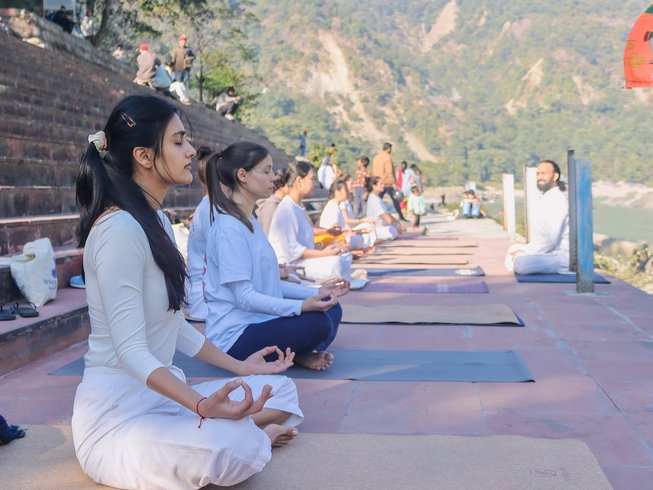
Riverside yoga
Have some quiet moments of yoga by the Ganga, get in touch with nature, elevate your spirits, and feel in harmony.
Vashistha Cave
Vashishta Gufa is located along the banks of the Ganga River, and Gufa is loved by those who are fond of meditation. It was said that there, the great Sage Vashishta meditated.
Ganga Arti
Get a very religious experience by witnessing the Ganga Aarti ceremony, a religious ritual that is performed on the Ganges.
Instructors
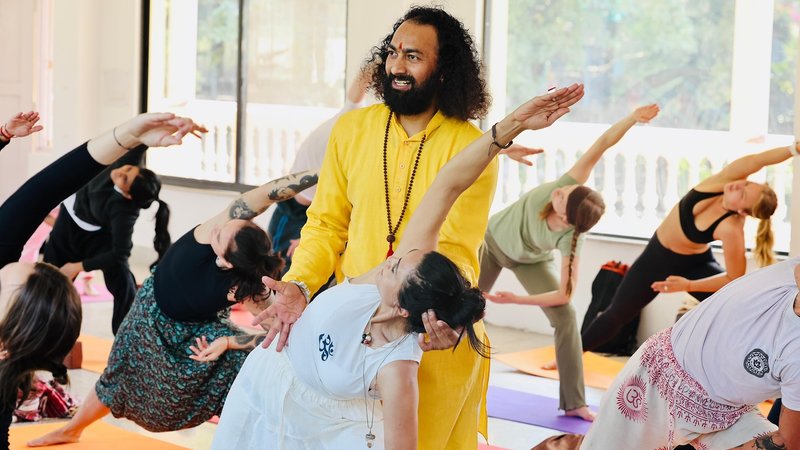
Dinesh Chandra Shastri
Dinesh began yoga at a very young age and has 25 years of learning and teaching yoga experience in India and other countries. He has studied all yoga practices, mantras, Vedas, Sanskrit, Bhagavat Gita in the deep Hindu tradition, yogi life, and culture. He has a bachelor's degree in Sanskrit, holds the title of Sashtri, and has a master's degree, and has successfully obtained the title of Ashariya. Dinesh is well-versed in Hatha yoga, Astanga yoga, Sivananda yoga, Sukshambyayam yoga, and Laughter yoga.
Retreat location
The quest to learn yoga in India often leads to Rishikesh. Surrounded by the mighty Himalayas and a serene environment in the lap of the Ganga.
Rishikesh, the yoga capital of the world, provides the ideal setting for a yoga experience. Located in the Himalayan foothills and graced by the sacred Ganges River, the peaceful setting promotes spiritual growth, tone-mindfulness, and mending. This place provides a genuine and spiritual learning experience. The peaceful surroundings, skilled teachers, and yogic way of life make it the ideal place to deepen your practice.
The holy Ganges and the community of like-minded people also provide an inspiring and life-changing environment. Several world-famous yoga masters have learned there, making it a place of historical importance to learn yoga.
Om Shanti Om Yoga Ashram is located on Baba Balak Nath Road, Tapovan, Rishikesh, Uttarakhand, 249192, India. Nestled in the peaceful surroundings of the Himalayan foothills, the ashram offers a serene and spiritually uplifting environment, ideal for yoga teacher training, meditation, and self-discovery.
Rishikesh, often known as the “place of sages,” is a world-renowned spiritual town situated on the sacred banks of the River Ganga at an altitude of approximately 365 meters above sea level. Surrounded by the beautiful Shivalik range of the Himalayas on three sides, Rishikesh is considered one of the best destinations for yoga, meditation, Ayurveda, and spiritual growth.
It attracts yoga practitioners, spiritual seekers, and travelers from across the globe. The city is home to numerous yoga schools, ashrams, and wellness centers where students go to deepen their understanding of yoga and holistic living. It is believed that practicing meditation and yoga in Rishikesh helps one move closer to inner peace and spiritual liberation (moksha), especially when combined with a sacred dip in the holy Ganga River.
Every year, the famous International Yoga Festival held at Parmarth Niketan Ashram welcomes participants from all over the world, creating a vibrant atmosphere of learning, healing, and transformation along the banks of Mother Ganga.
Apart from yoga and spirituality, Rishikesh is also famous for adventure activities such as white-water rafting, trekking, bungee jumping, and mountain excursions. The rafting season usually begins in March and continues until July, making it the perfect destination for both spiritual retreats and adventure tourism.
The city also carries a rich spiritual and cultural history. Renowned saints and spiritual masters such as Swami Vivekananda, Swami Rama Tirtha, and Swami Shivananda spend time there in deep study and meditation.
In 1968, the legendary band The Beatles visited the Maharishi Mahesh Yogi Ashram in Rishikesh, bringing international attention to the town. Inspired by their stay, they composed many songs, making it even more famous among global travelers and spiritual seekers.
At Om Shanti Om Yoga Ashram, students experience authentic yogic living in the heart of this sacred city, combining traditional yoga teachings with the peaceful energy of Rishikesh for a truly life-changing journey.
Rishikesh, India: History of yoga
When doing yoga, most individuals envision the scenery, breathholding, meditative trance, and a journey that will guide them to inner harmony. To find out more about the origin of yoga, you'll have to move beyond the current fads and go to the origin of the practice in the town of Rishikesh in India, at the foothills of the Himalayas. It has served as a spiritual hub to sages, mystics, and spiritual travelers all over the world.
The name Rishikesh is derived from the Sanskrit word Hrishikesha, which translates to Lord of the Senses, and this name is attributed to Lord Vishnu. Rishikesh, with nature all around and with the blessing of the sacred Ganga, provides the perfect place to be introspective, learn, and to self-purify.
The historical background of yoga in Rishikesh
Rishikesh has its roots in the ancient spiritual history of India, 5,000 years ago, during the Vedic era. Rishikesh, blessed by the Ganga, has long been an organic refuge of austerity, meditation, and liberation. It is glorified in the myths, the Vedas, Puranas, the Bhagavad Gita, and the Hatha Yoga Pradipika. These scriptures refer to Rishikesh as the divine land where gods and sages had decided to develop spiritually.
The yoga history in Rishikesh dates back to a time as ancient as the Himalayas. The city is mentioned in Vedic texts, Upanishads, and Puranic writings, and is said to be a Tirtha, a well-known ford. It is believed that there was a time when philosophers like Rishi Vashishta, Rishi Bharadwaja, and Lakshmana visited this place to meditate.
The spiritual heritage of the town has been maintained by the fact that the town has remained associated with yoga. Through all the ups and downs of empires, the divine vibration of Rishikesh still vibrates slowly, untouched and yet fully awake.
Ashrams and international fame
Even though yoga found its seed in Rishikesh a long time ago, the modern evolution of the practice started in the first half of the 20th century. Rishikesh was an area where sadhus and saints could find seclusion in the Himalayas in the 1900s. When India was entering the post-colonial period, spirituality revitalized the interest of the visionaries and teachers who then established learning centers throughout Rishikesh.
The town saw the establishment of many ashrams, among them Sivananda Ashram of The Divine Life Society (established in 1936), Parmarth Niketan, and Yoga Niketan. These ashrams provided yoga training programs, and they not only attracted Indians, but also seekers throughout the world. This was a turning point in the 1960s when Rishikesh achieved international status for its ancient wisdom.
In 1968, The Beatles took a trip to the ashram of Maharishi Mahesh Yogi to learn transcendental meditation, which left millions of people aware of the spiritual heritage of Rishikesh, and the event inspired some of their most well-known songs.
Modern Rishikesh: A global hub for yogis
Rishikesh has become not only a sacred city today, but also a global yoga center. Thousands of students attend teacher trainings, spiritual workshops, and wellness programs every year. The city has not only the ancient forms of Hatha and Ashtanga Yoga, but also the more recent Vinyasa flow and Kundalini flow, and everyone can get to know the most genuine form of yoga in Rishikesh.
Parmarth Niketan Ashram conducts the largest yoga festivals, which include the renowned International Yoga Festival. Individuals across the globe go to attend yoga sessions, sing devotional kirtans, take part in Vedic ceremonies, and get Ayurvedic treatment from well-venerated teachers and spiritual guides.
Such a combination of ancient knowledge and global involvement indicates that the present-day Rishikesh is a living embodiment of the universal spirit of yoga.

This Yoga Retreat is vegetarian-friendly
Click to see more vegetarian-friendly Yoga Retreats
Food
Nourish your body with healthy and sattvic meals at Om Shanti Om Yoga Ashram's yoga school in Rishikesh. The meals will be prepared with fresh ingredients and are designed to support your yoga journey. Experience the true essence of yogic living through a balanced diet that detoxifies and energizes you for your practice.
- Breakfast - A wholesome start to your day with fresh fruits, porridge, and herbal tea
- Lunch - A balanced vegetarian meal with seasonal vegetables, lentils, and rice
- Dinner - A light and nutritious dinner to end your day on a healthy note
Nourish your body and soul with satvik food
Embrace the power of mindful eating on your yogic path! At Om Shanti Om Yoga Ashram, they understand that food is not just sustenance, but a crucial element of your spiritual journey. Their dedicated kitchen team will craft each meal with intention and love, creating a nourishing experience that will elevate your yoga teacher training to new heights.
They honor the ancient wisdom of satvik cuisine, preparing vegetarian and lacto-vegetarian dishes that resonate with yogic principles. This wholesome approach to nutrition will foster harmony within your body, clarity in your mind, and depth in your spiritual practice. By choosing pure, natural ingredients and time-honored cooking methods, Om Shanti Om Yoga Ashram supports your quest for balance and inner peace.
What they offer:
- 3 healthy meals per day: Keep yourself energized by having three vegetarian meals a day, that is, breakfast, lunch, and dinner on Monday to Saturdays
- Refreshing teas: Om Shanti Om Yoga Ashram also serves refreshing teas, juices, and drinks in between meals in order to ensure that you are perfectly hydrated and revitalized.
- Special dietary needs - Om Shanti Om Yoga Ashram will be able to cater to vegan and gluten-free diets. In case you have certain eating needs, you can tell them when making a reservation. During training, severe food allergies might not be supported; therefore, it is important to inform about serious allergies in advance.
- Sundays for exploration - Om Shanti Om Yoga Ashram does not offer meals on this day, providing you with an opportunity to go to cafes and restaurants around Rishikesh and taste the local cuisine.
Om Shanti Om Yoga Ashram serves pure vegetarian food as per the yogic diet, and they also have vegan food on demand. If you suffer from food allergies or specific dietary requirements, please inform them beforehand so that they can arrange suitably.
The following meals are included:
- Breakfast
- Lunch
- Dinner
- Drinks
The following drinks are included:
- Tea
The following dietary requirement(s) are served and/or catered for:
- Vegetarian
- Vegan
- Gluten Free
- Other dietary requirements on request
What's included
- Certification: A Yoga Alliance USA-accredited certificate, allowing you to teach yoga worldwide upon successful completion
- 25-day yoga journey: Transform your life in just 25 days with this 200-hour YTTC
- Learning materials on yoga: Comprehensive study guides, books, and instructions on yoga philosophy, anatomy, and teaching methodology
- Regular practice of yoga: Systematic practice sessions in Hatha, Ashtanga, Vinyasa, and Yin yoga by qualified instructors
- Meditation and breathwork: Guided meditation, pranayama, and relaxation techniques daily to increase inner awareness
- Karma yoga and self-reflection: Time devoted to self-study, group discussions, and community service
- Ceremonies and rituals: Sustaining attendance at fire puja, recitation of mantra, Ganga Aarti, and purification rites for spiritual enlightenment
- Closing and opening ceremony: Vedic rituals and energy healing ceremonies to bless your trip
- Yoga props and accessories: Access to yoga mats, blocks, straps, and bolsters during practice
- Facilitated treks: Treks to sacred temples, caves, Himalayan summits, and the holy Ganges for meditating and soul-searching
- Airport pickup: Free airport pickup from Dehradun airport, guaranteeing a seamless and trouble-free arrival
- 24 nights accommodation: Comfortable private or shared accommodation for 25 days in a peaceful, traditional ashram environment
- 1 night complementary accommodation
- Healthy food: Three nutritious vegetarian meals a day, well-designed to maintain your yoga practice and health
What's not included
- Foreign flights and visa: Students should make their own travel and Indian visa arrangements
- Transportation beyond pickup: Travel beyond pickup, like taxis to local cities or local points of interest, is not included
- Heater or air conditioner: Can be provided for an additional 300 USD for the entire training period
- Laundry facility: Laundry service can be included at an extra cost
- Personal expenses: Snacks, toiletries, shopping, and souvenirs are excluded
- Additional yoga workshops: Advanced workshops and teacher training intensives outside of the regular curriculum
- Ayurvedic massages and treatments: Available on demand for relaxation and rejuvenation for an additional price
How to get there
Recommended Airports
Transfer included
Jolly Grant Airport
15 km away from your destination
Transfer not provided
Indira Gandhi International Airport
209 km away from your destination
You can reach Om Shanti Om Yoga Ashram through different methods, like by air, by taxi, or by train.
Arrival by plane
The best method to reach Om Shanti Om Yoga Ashram is from the Delhi airport. You can take a domestic flight to Rishikesh. Jolly Grant Airport (DED) is 25 kilometers away from the ashram. After this, you can take a taxi.
Arrival by bus
From the capital city, Delhi, you can take a bus from the international or national bus stands. There are two bus stands that have frequent buses to Rishikesh: one is Aanand Vihar, and the other is Kashmiri Gate. After reaching Rishikesh, Om Shanti Om Yoga Ashram can arrange a cab for you at a suitable fee.
Arrival by train
You can also choose the path via train. Daily trains are available from Delhi to Haridwar, and Om Shanti Om Yoga Ashram can arrange a taxi after you reach the station.
Arrival by taxi
It is also possible to arrange a direct taxi from Delhi Airport to the school. Om Shanti Om Yoga Ashram can arrange it for you.
Cancellation Policy
- A reservation requires a deposit of 15% of the total price.
- The deposit is non-refundable, if the booking is cancelled.
- The rest of the payment should be paid on arrival.

Reviews
For this organizer you can guarantee your booking through BookYogaRetreats.com. All major credit cards supported.
Similar Yoga Retreats you might like
You recently viewed