Online 100-Hour Hatha Vinyasa and Meditation Teacher Training Course With 30 Live Hours
Online Yoga Teacher Training
Now is a great opportunity for you to acquire an online yoga teacher certification from the Karuna Yoga Vidya Peetham. It is a self-paced yoga course with live sessions where you get a minimum of 30 days to a maximum of 06 months to complete. The course includes pre-recorded and lives yoga sessions on each topic of each subject with clear explanations and demonstrations from the teachers, and they work even with the low connection. It's completely a real learning experience from the Karuna Yoga Vidya Peetham to yourself. Join them today and be certified as a yoga teacher just from the comfort of your home! This 100 hours Hatha-Vinyasa Yoga Teachers Training Course is programmed for those enthusiasts who desire to have a professional certificate in the future but can’t afford the time of one month in one slot.
Meet the instructors
Highlights
- 30 hours of live sessions
- 70 hours of, study books, self-practised and self-study
- Flexible duration - students can complete their course within 1 to 3 month
- Live online sessions will be held over Zoom or Google Meet
- Online sessions' time-zone: Bangalore, India (GMT+5:30)
- Daily one live yoga session theory or practical classes, Monday to Sunday
- 100-hour yoga teacher training curriculum
- Eligible to register with Yoga Alliance upon completion
- Special discounts on advanced courses
- There will be live contact hours whenever needed in order to clarify doubts and the final exam is live.
- All classes are previously recorded so students can access the material at their own convenience
Skill level
- Beginner
- Intermediate
- Advanced
Yoga styles
30 days with instruction in English
Program
Pre-application requirements
Please install Zoom to attend the live sessions. You will also need a yoga mat, computer/tablet or smartphone, internet connection, pen, and notebook. Props are also recommended but not mandatory to have. All levels are welcome.
Certifications
To receive the 100-hour certificate as a yoga teacher, you must complete a written exam and submit a video demonstrating your skills and knowledge while teaching a yoga class.
The course/hours count as Continuing Education hours for Registered Yoga Teachers (RYT®) only.
How the training works
There will be 70 non-contact hours of pre-recorded and 30 contact hours of live sessions via Zoom, live classes every week, and two Q&A sessions every weekend. You will also have 60 non-contact hours for self-study and assignments.
Live classes will be adjusted according to your time, from Monday to Sunday around 5:00 a.m. -11:00 p.m. There might be a little time adjustment from month to month. All times are based on IST/GMT+5:30.
Timing of sessions or daily schedule (GMT+5.30)
- 10:00 - 10:30 Techniques, training, and practice
- 10:30 - 11:00 Anatomy and physiology / upanisad
- 11:00 - 12:00 Asana/Hatha yoga
- 12:00 - 13:00 Vinyasa/Gentle yoga
- 13:00 - 14:00 Lunch
- 14:00 - 15:00 Restorative yoga
- 15:00 - 15:30 Teaching methodology
- 15:30 - 17:00 Patanjali Yoga Sutra/Bhagavad-Gita
Curriculum / Course information
This program is best suited for beginners and for those who want to deepen their understanding of the basics of the yoga discipline. Yogic anatomy physiology, teaching methodology, techniques, asana, meditation, pranayama, and philosophy classes along with applied anatomy makes the 100 hours course a very interesting study package and will provide students with the ability to establish their own self-practice using yoga asana and meditation techniques.
Deepen your practice and your knowledge
Are you a yoga professional or a curious practitioner who wishes to deepen your yoga knowledge and techniques? Then a continuing education course may be something for you! You will learn selected specialized yoga topics that will allow you to expand your horizons when it comes to your personal practice or that of your students. With the knowledge you will acquire, you will gain a deeper understanding of the functioning of anatomical and energetic body layers, and develop a more complete insight into yoga.
What you’ll learn
- You will learn beginners level asana, forward, backward, arm balance, hip opening and inverted poses.
- You will know how to integrate asana, and pranayama mudra sutra into your yoga practice.
- You will learn the methods given by swatmarama to master your mind through hatha yoga.
- Practice asana, pranayama and savasana daily
- Improve your practice of advanced asanas daily
- Get more insights into the core principles of yogic philosophy
- Deepen your understanding and application of mudras and bandhas
Assessment and certification
The students are continuously assessed throughout the course at all levels. There will be a written exam at the end of the course to evaluate the understanding of the philosophy of yoga and skills of the students. Participants should pass all different aspects of the course to be eligible for the course diploma.
Recommended texts
- Asana Pranayama Mudra Bandha by Swami Niranjananda Saraswati
- B.K.S. Iyengar, Light On Yoga.
Curriculum 100-hour vinyasa-hatha yoga teacher training course
History of Vinyasa yoga
- What is Vinyasa krama yoga?
- Principles of vinyasa yoga
- Breathe rate in Vinyasa practice
- Focusing the mind on the breath (ananta samapatti)
- Moving with energy
- Speed or pace of Vinyasa
- Being here now / awareness and spirituality
- Moving meditation / the ultimate Vinyasa flow
- Building the foundation for practice
- Levels of intensity / balancing the four variables
- Choice of yoga postures
- Yoga posture variations
- Length of asana holds
- Choice of Vinyasa
Three Internal Tools / For Successful Practice
- Develop mind flow
- Drishti: focus on the internal gaze
- Bandhas: gateways of internal power (moola, uddiyana, and jalandhara)
Three distinct qualities of yoga breathing
- Complete breath
- Slow deep breathing
- Sound breathing: ujjayi, or victorious breathe
- Visesha Vinyasa kramas
Vinyasa sequence practice
- Back bending
- Arm balance
- Hip opening
- Core
- Twisting
- Hatha yoga syllabus
Techniques training and practice
- Mantras
- Gayathri mantra
- Maha mrityunjaya mantra
- Santhi mantra
- Patanjali mantra
- Surya namaskara (sun salutation)
2.1. Sivananada School of yoga style
Asanas
3.1. Standing asana
- 1) samasthiti (upright)
- 2) tadasana (mountain)
- 3) vrksasana (tree pose)
- 4) garudasana (eagle pose)
- 5) padahastasana (hand to foot pose)
- 6) ardha chakrasana (half wheel pose)
- 7) utthita trikonasana (triangle pose)
3.2. Kneeling asana
- 1) vajrasana (diamond pose)
- 2) balasana (child’s pose)
- 3) shashankasana (moon or hare)
- 4) madukasana (frog pose)
3.3. Sitting asanas
- 1) dandasana (staff pose)
- 2) sukhasana (easy pose)
- 3) padmasana (lotus pose)
- 4) janu sirsasana (head to knee pose)
- 5) parivrtta janu sirsasana
- 6) ardha baddha padma paschimottanasana
3.4. Supine asanas
- 1) supta pawanmuktasana
- 2) jathara parivartanasana
- 3) setu bandha sarvangasana
- 4) anantasana(vishnu couch pose)
- 5) supta padangusthasana
3.5. Prone asanas
- 1) makarasana (crocodile pose)
- 2) ardha shalabhasana (half locust)
3.6. Arm balancing and head standing
- 1) ardha phalakasana (low plank pose)
- 2) chaturanga dandasana
- 3) purvottanasana
- Phalakasana (plank pose)
- Santolanasana (balancing pose)
- Pranayama
4.1. Introduction
4.2. Four aspects of pranayama
- Pooraka or inhalation
- Rechaka or exhalation
- Antar kumbhaka or internal retention
- Bahir kumbhaka or external retention
4.11. Full Yogic Breathing
4.12. Kapalbhati (frontal brain cleansing)
4.13. Bhastrika (bellows breath)
4.14. Nadi Shodhana (nadis purification)
Mudra
- i) Chin mudra (gesture of consciousness)
- ii) Bhairava mudra (terrifying attitude)
- iii) Hridaya mudra (heart gesture)
- iv) Shambhavi (eyebrow center gazing)
- v) Nasikagra Drishti (gaze at tip of nose)
6.3. Bandhas (locks)
- Jalandhara Bandha
- Pratyahara
7.1. Yoga Nidra
- Dharana (concentration)
8.1. Trataka (concentrated gazing)
8.2. Antar trataka
- Meditation
9.1. Meditation on breath
- Shatkarma (internal cleansing)
- Jala neti (nasal cleansing with water)
- Sutra neti (nasal cleansing with thread)
Techniques
- 11.1. Principles of yogic practices
- 11.2. Asana laboratory observation
- 11.3. Basic elements of asana practice
- 11.4. Principles in giving physical cues
- 11.5. How not to touch
Teaching methodology
Introduction
- 1.1. Trend of teaching
- 1.2. Methodology
- 1.3. Need for yoga teaching method
- 1.4. Importance of teaching method
- Physical setting
- Class etiquette
- Classroom setup and orientation
- Yoga, anatomy and physiology
Introduction
1.1. Anatomy
1.2. Physiology
1.2. Anatomical terminology
1.3. Directional terms
1.5. Planes of the body
1.6. Body cavities
1.7. Different systems of the body
Respiratory system
2.1. Gaseous exchange
2.2. Respiratory system
2.3. Lungs
2.4. Pleura
2.5. Bronchi
6. Pulmonary ventilation
2.7. Respiration mechanism
- A) shallow breathing
- B) deep breathing
- C) unconscious breathing
- D) conscious breathing
2.8. Lung volume
- A) total air volume
- B) tidal volume
- C) vital capacity
2.9. Abnormal breathing and breathing disorders
Muscular system
3.1. Muscular tissues can be classified into
- Smooth, non-striated or involuntary
- Cardiac muscle or myocardium
- Skeletal, striated, or voluntary muscles
3.2. Characteristics of skeletal muscles
3.3. Functions of muscles
Movement
Maintaining posture
III. Producing heat and temperature regulation
- Circulation
- 3.4. Skeletal muscle structure
- 3.5. Properties of skeletal muscle
Skeletal system
- I) cartilage
- II) tendon
- III) ligament
4.1. Bone
4.2. Functions of the skeletal system?
4.3. The main bones of the human skeleton
4.4. Classification of bones
- I) long bones
- II) short bones
- III) flat bones
- IV) irregular bones
- V) sesamoid bones
5. Bone structure and formation
- I) compact bone (cortical bone)
- II) cancellous bone (spongy bone)
4.6. Bone development
- I) intramembranous ossification
- II) endochondral ossification
4.7. Bone growth
4.8. Human skeleton bones
- A) axial skeleton
- B) appendicular skeleton
4.9. Skeleton joints
- I) fibrous (immovable)
- II) cartilaginous (partially moveable)
- III) synovial (freely moveable) joint
4.10. Synovial joints classifications
- Hinge
- Ball and socket
- Pivot
- Gliding
- Saddle
- Planar
4.11. Movements occurring at joints
- Gliding movements.
- Angular movements.
- A) flexion
- B) extension
- C) adduction
- D) abduction
Rotation or circular movements.
- A) medial rotation
- B) lateral rotation
- C) circumduction
- 4.12. Common bone disorders
Yoga philosophy, lifestyle and ethics
Introduction
- 1.1. Meaning
- 1.2. Definition of yoga
- 1.3.History of yoga
- 1.4. Shad-darshan (six schools of indian philosophy)
- Nyaya – by sage gautam
- Vaishesika – by sage kanad
III. Sankhya – by sage kapil
- Yoga – by sage patanjali
- Poorv mimamsa – by sage jaimini
- Uttar mimansa (vedanta) – ved vyas
Hatha yoga
- 2.1.1. Meaning of hatha yoga
- 2.1.2. Asana and hatha yoga
- 2.1.3. Pranayama and hatha yoga
- 2.2. Nadis
- 2.2.1. Ida, pingala, shushmna
- 2.3. Chakras
Four attainments of life
- I) dharma (virtue)
- II) artha (wealth)
- III) kama (pleasure)
- IV) moksha (emancipation)
3.1. Four stages of life
- I) brahmacharya ashram
- II) grihastha ashrama
- III)vanprastha ashrama
- IV) sanyasa ashrama
Ethics in teaching and touching
A) yama (self-restraints)
Ahimsa (non-violence)
Satya (truthfulness)
III. Asteya (honesty)
- Brahmacharya(sensual abstinence)
- Aparigraha(non-possessiveness)
B) niyama (fixed observances)
- Saucha (cleanliness)
- Santosa (contentment)
III. Tapah (austerity)
- Svadhyaya (self-study)
- Isvara pranidhana (surrender)
- Patanjali yoga sutra
What is yoga?
Five characteristics of the mind
III. Practice and non-attachment
Types of concentration
Obstacles and solutions
Stabilizing and clearing the mind
VII. By controlling prana
VIII. By observing sense experience
- By inner illumination
- By detachment from matter
- By knowledge of dreams and sleep
XII. By meditation as desired
XIII. Fruits of meditation
Instructors

Dr . S. Karuna Murthy
Dr. Karuna served as a yoga therapist at S-VYASA, Bangalore, as a yoga lecturer at Bharathidasan University, and overseas as a yoga instructor at Cali wow fitness center. Dr. S. Karuna Murthy has completed an M.Sc in Yoga from Swami Vivekananda Yoga Anusandhana Samasthana University and Ph. D from Bharathidasan University, also 200-hour teacher training course, and 500-hour advanced teacher training course, and to registered E-RYT-500 with Yoga Alliance (USA), which reflects his in-depth knowledge and expertise in the context of yoga.
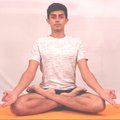
Suhas
Teaching Hatha yoga for over five years, Yogi Suhas has earned a good name in motivating students with the utmost professionalism. He helps students gain an understanding of body alignment and asana. His passion for yoga is visible in the classes he takes; students find his classes highly effective. Yoga has been a part of his life since his childhood. Yogi Suhas helps students plunge into what he has been teaching with enthusiasm and an open mind. Suhas has completed a Graduation degree in Commerce and 200 hrs Yoga Teacher Training from Karuna Yoga Vidya Peetham, Bangalore, India.
Retreat location
This teacher training is held online. Karuna Yoga Vidya Peetham is located in Karnataka, India (GMT+5:30), and they will live-stream yoga classes via Zoom which you can participate from the comfort of your home.

Spa treatments
What's included
- 100-hour Hatha Vinyasa online Yoga Teacher Training Course
What's not included
- Accommodation
- Meals
How to get there
Recommended Airports
Transfer not provided
Kempegowda International Airport
28 km away from your destination
Cancellation Policy
- A reservation requires a deposit of 100% of the total price.
- The deposit is non-refundable, if the booking is cancelled.

Reviews
No reviews yet
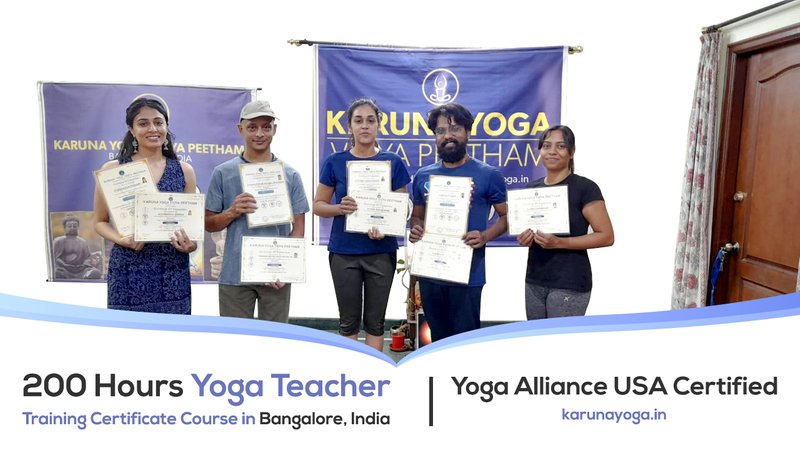
For this organizer you can guarantee your booking through BookYogaRetreats.com. All major credit cards supported.
Similar Yoga Retreats you might like
You recently viewed