

7 jours en stage holistique de yoga et méditation à Rishikesh, Inde
India Holistic Meditation and Yoga Retreat
Relax, refresh, and renew on this holistic retreat! Join Atharv Yogshala on this holistic retreat. Experienced or not, everyone can join this retreat. Make time for yourself and enjoy a wonderful time with Atharv Yogshala's guidance. This retreat is aimed at finding yourself through yoga; you will feel refreshed and balanced at the end of the retreat! You'll experience guided meditations, yoga, and nutritional workshops. You'll get one-on-one individualized sessions working on your mind, body, and spirit. Atharv Yogshalalook looks forward to making your health and healing journey an easy and beautiful transformation.
Rencontrez les professeurs
Caractéristiques
- Conférence interactive sur la nutrition
- Méditation de sommeil psychique
- Cours quotidiens d'asanas, de méditation et de pranayama
- Des repas végétariens nutritifs et des tisanes seront servis chaque jour
- 6 nuits d'hébergement
- Profitez d'excursions dans la nature
- Transfert depuis l'aéroport
Niveau de pratique
- Débutant
- Intermédiaire
- Avancé
Styles de yoga
7 jours de cours en Anglais
Hébergement
Installations
- Coin repas
- Jardin
- Cuisine
- Hall d'entrée
- Personnel multilingue
- Résidence non-fumeur
- Studio de yoga
- Blanchisserie
- Parking gratuit
- WI-FI gratuit
- Accès internet
- Planche à repasser
- Service de blanchisserie
- Agence de voyage
- Wi-Fi
The rooms are cozy, and comfortable, and will suit your needs during your retreat. Single rooms, twin rooms, and three-person shared rooms are available. The rooms have air conditioning and ensuite bathrooms. Wi-Fi is available and you can use the laundry facility if you need to.
Programme
This retreat is aimed at finding yourself through yoga. Take time for yourself and step out of your busy everyday life to enjoy peace, calmness, and nature on this beautiful retreat in Rishikesh. Find the calmness and steadiness in yourself and bring it back with you after these amazing seven days. The accommodation is situated on the outskirts of Rishikesh, the yoga capital of the world. You will be surrounded by nature, close to the Ganga and next to the forest. Atharv Yogshala only works with small groups (six or eight participants) during retreats to give you the best experience and the personal attention you need.
Kriya yoga (Shat Karma)
Shat Karma, or Shat Kriya as they are often known, are six yogic cleansing processes used by yoga practitioners to help purify the physical body. During Atharv Yogshala's retreats, they will explain some of these methods to you and you can apply these methods during and after your stay. The body has an incredible natural tendency towards homeostasis. That means the body has a natural tendency to maintain stability in the circumstances given to you. The Shat Kriyas come to your aid to help remove built-up toxins from the body, with particular emphasis on the respiratory and digestive systems.
These are the shat karma you will learn about:
- Jal neti (nasal cleansing with water)
- Sutra neti (nasal cleansing)
- Tratak kriya (concentrated gazing)
- Kapalbhati
- Kunjal kriya (the practice of vomiting water)
Pranayama
Pranayama is the control, regulation, and letting go of the breath. There are many different pranayama methods with different effects on the body. Practicing pranayama gives the practitioner more awareness of the breath, the breathing pattern, and the respiratory system.The easiest way to start with pranayama is to observe your breathing pattern. Sit in a comfortable position or lie down in Savasana. Close your eyes and observe your breathing and try not to interfere. Focus on the rhythm of your breathing, and feel the breath flowing in and out of your nose.
You can bring your awareness to different parts of your body where you feel your breath. In your throat, chest, lower ribs, and belly. Then focus on your whole body and the whole breathing process. Open your eyes again and notice if anything changes in your breathing pattern. Maybe your breath became slower, calmer, or deeper. On this holistic retreat, Atharv Yogshala will teach you different pranayama techniques. There are many ways to become more aware of your breath and even more ways to control it. You will practice the following pranayama during the retreat:
- Nadi shodhana (cleansing energy channel)
- Bhramari pranayama (humming bee breath)
- Sheetkari pranayama (hissing breath)
- Kapalbhati pranayama (breath of fire)
- Ujjayi pranayama (the psychic breath)
- Bhastrika pranayama (bellows breath)
Asana
Asana is what most Western people know as yoga. They are not also a great way to move your body, become more flexible, attain better posture, or even get a great workout. Asanas are postures or poses which open energy channels and psychic channels. Asanas are not simply a physical practice, they are very much spiritual practice. During this retreat, Atharv Yogshala will teach different styles of yoga. They have a wide variety of knowledge about different yoga styles and different backgrounds. This makes it possible for them to provide you with different types of asana classes.
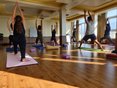
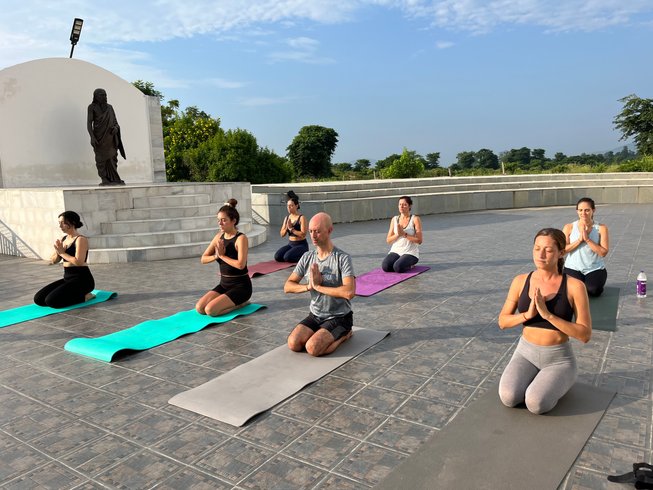
Hatha Vinyasa is a flowing form of yoga. Every asana is connected with the breath and with every breath you will flow from one asana to the other. This requires focus, attention, and control. Yin yoga is a calmer form of yoga. It consists of passive poses, which you stay in for a longer time. It is a great way to open the joints and loosen the connective tissue. During the retreat, you will have asana classes inside and outside. Atharv Yogshala will have a class on the beach, next to the Ganga. Breathe in the fresh air, find balance, and find firmness and steadiness in different asanas.
The types of asana you will learn are:
- Pawan Mukta asana 1 (Anti-rheumatic group)
- Pawan Mukta asana 2 (The digestive or abdominal group)
- Pawan Mukta asana 3 (Energy blocks postures)
- Surya namaskar (Sun salutations)
- Chandra namaskar (Moon salutations)
- Standing asana
- Meditation asana
- Relaxation posture
- Vajrasana groups of asana
- Forward bending asanas
- Backward bending asana
- Spinal twisting asana
- Inverted asana
- Balancing asana
Meditation
(तत्र प्रत्ययैकतानता ध्यानम् ॥२: Tatra pratyaya-ikatānatā dhyānam) Meaning: allowing your thoughts to flow in an uninterrupted stream result in contemplation. Although most people meditate with closed eyes, many beginners find it useful to have a point of focus, such as a candle. Concentrating on the flame can make it easier to clear your mind. When learning how to meditate, beginners tend to get frustrated by the persistence of outside thoughts, anxieties, to-do lists, and random memories that parade constantly through the brain.
Instead of fighting them off, simply observe them as they enter your mind and let them pass. Repeating a mantra to yourself is another good way to maintain your focus. During this retreat, Atharv Yogshala will teach you different meditation techniques. After the retreat, you will have the knowledge to meditate by yourself and find the calmness you felt during the retreat.
The types of meditation you'll focus on during the retreat are:
- Mindfulness meditation
- Spiritual meditation
- Focused meditation
- Movement meditation
- Mantra meditation
- Transcendental meditation
- Progressive relaxation
- Loving-kindness meditation
Daily sample schedule
- 05:30 Wake up
- 06:00 - 07:00 Pranayama and Shatkarma
- 07:00 - 08:30 Traditional Hatha yoga
- 08:30 - 09:30 Breakfast
- 10:00 - 13:00 Free time or excursions
- 13:00 - 14:00 Lunch break
- 16:00 - 17:30 Hatha Vinyasa Flow or time yoga
- 17:30 - 18:00 Tea break
- 18:00 - 19:00 Meditation
- 19:00 Dinner time
- 20:00 Bedtime
Excursions
Nature excursions to Neer waterfall and a forest hike are included in this retreat.
Professeurs
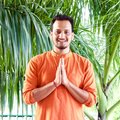
Kuldeep Singh Bisht
Kuldeep Bisht started his journey at a young age an unknown sense of karma yoga was within him from his schooling days; coming from a nuclear family Kuldeep is the elder child for which he had great responsibilities on him. after completing his schooling when everyone of his friends was moving to earn money and getting good jobs he was curious about spirituality and purpose of life, so he traveled towards the Himalayas and after visiting many temples, places and communicating with Gurus he moved towards the south and started his yogi journey.

Lisa Marie Veit
Lisa is deeply immersed in the world of yoga, having completed both a 200-hour and a 300-hour yoga teacher training in Rishikesh in 2022. These intensive experiences not only deepened her personal practice but also empowered her to guide others on their own yoga journey. In the tranquil haven of Varkala, she further dedicated 50 hours to pranayama, exploring the art of breath control and discovering a profound sense of inner calm. Simultaneously a teacher and a student, Lisa continues to find joy in both sharing and expanding her knowledge.
Lieu du séjour
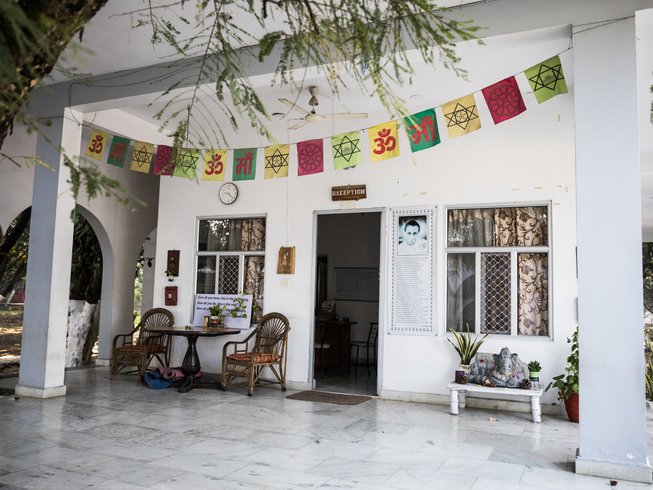
The accommodation is situated in a beautiful quiet place, just outside of Rishikesh. You will be surrounded by nature and Indian culture and you will feel a calmness come over you as soon as you enter the accommodation.

Repas
Atharv Yogshala will provide you with three delicious Sattvic meals a day. Herbal teas are also available during the day.
Sattvic food
Yoga and Ayurveda have gained increasing importance in the last couple of years. Although these practices and disciplines originated in India, they have gained a lot of popularity outside the country, specifically due to the amazing benefits they offer. Specialists from these disciplines have always believed that the approach to health should not only be physical but also mental, emotional, and spiritual. Their methods of practice also support this approach. And the same holistic approach comes into play in their diets as well.
Yoga and Ayurveda emphasize the Sattvic diet for healthy eating. The Sattvic diet is found to be abundant in Prana, a universal force that gives life to the plant and animal kingdoms. A Sattvic diet is based on foods that are high in ‘sattva Guna’ (goodness), according to yoga and Ayurvedic sciences. These systems believe that the diet leads to a clear mind and calm demeanor, while simultaneously benefiting the body. Experts say that a Sattvic diet has all the five natural elements and this helps maintain overall balance.
Elements of a Sattvic diet
A Sattvic diet includes water, fruits (all varieties), most vegetables, cereals, bread, pulses, nuts, oilseeds, dairy foods, and honey. Cow’s milk is considered the most Sattvic of all foods in this category. Goat’s milk is treated as a good substitute for cow’s milk but buffalo milk does not come under the Sattvic food group. The Sattvic diet does not include onions, garlic, red chilis, black pepper, and other pungent spices because they are believed to be stimulants. On the contrary, spices like turmeric, coriander, cardamom, cinnamon, and anis seed are recommended because these spices help the digestive system.
Sattvic foods are simple and easy to digest. They also require minimal cooking. Since there’s not much processing before these foods come to the dining table, they are closer to nature than other foods. Ideally, Sattvic foods are to be eaten fresh and immediately after cooking. Barring fruits, not many raw foods come under the Sattvic diet because raw foods are considered to be carriers of infectious agents.
Experts believe that a person who eats Sattvic food can achieve a great combination of physical, mental, and emotional harmony. Such a person would be well-focused in life and work as well. Additionally, the Sattvic diet improves immunity that allows its follower to remain disease-free, or even if he or she falls ill, the recovery would be quick. Positive pranic foods uplift and enhance your energy levels, fulfill your health needs, and help the body retain positive energy, which can help heal so many problems and issues. They are also usually high in nutritional value and can also help cure ailments and fulfill goals.
What exactly is a Sattvic diet?
A Sattvic diet, simply, means light and healthy food. It does not go to any extremes of taste, neither too sweet, nor too salty or spicy, just moderate. Put, Sattvic food is that which purifies the body and calms the mind. A Sattvic diet consists of pure food (not processed) that is light in potency, and rich in prana (life force). It energizes the body and mind. Cooked food, consumed within three to four hours of preparation, can be considered Sattvic.
Why adopt a Sattvic diet?
The intake of Sattvic food helps improve mental health and energy, thereby improving the state of our consciousness. It helps restore the harmony and balance of the body and mind. Having a Sattvic diet regularly can help in the formation and rebuilding of high-quality body tissues.
Les repas suivants sont inclus:
- Breakfast
- Lunch
- Dinner
- Drinks
Les boissons suivantes sont comprises:
- Eau
- Thé
Les régimes alimentaires suivants servis et/ou pris en charge :
- Yogique
Activités et lieux à visiter
- Extra Ayurvedic massages (one is included in the retreat)
- Activities and trips in Rishikesh, such as rafting
Ce qui est inclus
- Cours quotidiens d’asanas, de méditation et de pranayama
- Méditation de sommeil psychique
- Conférence interactive sur la nutrition
- Excursions dans la nature
- Utilisation du matériel de yoga
- 6 nuits d’hébergement
- Repas végétariens nutritifs quotidiens et tisanes
- Service de prise en charge depuis l’aéroport de Dehradun
Ce qui n'est pas inclus
- Billet d’avion
- Massages ayurvédiques supplémentaires
- Excursions supplémentaires
- Transfert au départ
Comment se rendre sur place ?
Aéroport recommandé
Transferts inclus
Jolly Grant Airport
À 17 km de votre destination
Conditions d'annulation
- Pour réserver, un dépôt de garantie correspondant à 26% du prix total est requis.
- Le dépôt de garantie est non-remboursable si vous annulez votre réservation.
- Le reste du paiement est dû à votre arrivée.

Avis
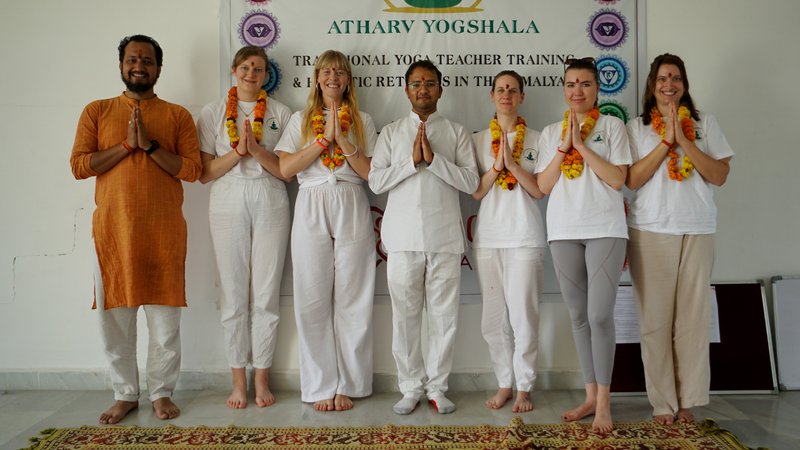
Pour cette offre, vous pouvez effectuez votre réservation sur BookYogaRetreats.com. La plupart des cartes de crédits sont acceptées.
Des Stages de yoga similaires que vous pourriez aimer
Vous avez récemment consulté